| Deshae Betts, IFBB Pro | Local Guides | 10 min read
Home Gym vs. Gym Membership: Pros, Cons, and Real Costs
Building a home gym sounds great until you see the price tag. Here's an honest comparison of costs, equipment, motivation, and results — so you can make the right choice.
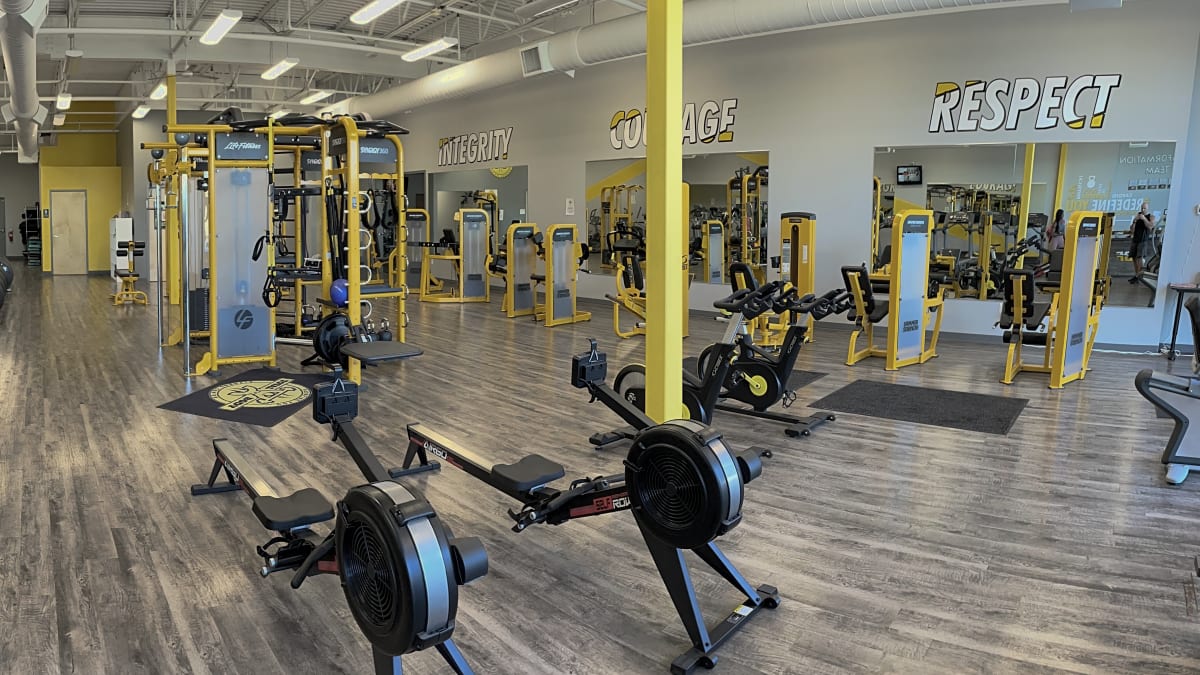
The home gym vs. gym membership debate comes down to math, motivation, and honesty about your habits. A decent home setup costs $2,000-5,000 upfront and limits you to whatever equipment fits in your garage, while a gym membership runs $40-60/month and gives you access to $100,000+ worth of equipment you’d never buy yourself. Neither option is universally better — but for most people, the gym membership delivers more value per dollar.
The Real Cost of a Home Gym
Let’s start with money, because that’s usually the first argument people make for home gyms: “It pays for itself.” Sometimes that’s true. Often it’s not.
Here’s what a home gym actually costs at three different levels.
Budget Setup ($500-800)
- Adjustable dumbbells (like Bowflex 552s): $300-350
- Flat bench: $80-120
- Pull-up bar (doorframe): $25-40
- Resistance band set: $30-50
- Yoga mat and foam roller: $40-60
This gets you a functional setup for basic strength training. You can hit every muscle group, but progressive overload hits a ceiling once the dumbbells max out (usually at 52.5 lbs). For someone doing general fitness work, this can last a while. For anyone serious about building strength, you’ll outgrow it within 6-12 months.
Mid-Range Setup ($2,000-4,000)
- Power rack with pull-up bar: $400-800
- Olympic barbell and 300 lbs of plates: $400-600
- Adjustable bench: $200-350
- Dumbbell set (5-50 lbs): $400-700
- Rubber flooring (100 sq ft): $150-250
- Mirror: $50-100
Now you’re training seriously. Squats, deadlifts, bench press, overhead press — the core compound lifts are covered. This is where most home gym owners land, and it’s a legitimate training environment.
Serious Setup ($5,000-10,000)
- Everything from mid-range, plus:
- Functional cable machine or pulley system: $800-2,000
- Cardio equipment (rower, bike, or treadmill): $500-2,500
- Specialty bars (trap bar, EZ curl, safety squat): $200-400
- Additional plate storage and organization: $100-200
- Upgraded flooring and sound dampening: $200-400
At this level, you’re replicating a solid gym experience in your home. But you’re also $7,000-10,000 deep before your first workout.
The Cost of a Gym Membership
Most gyms in the Lee’s Summit, Blue Springs, and Independence area charge between $30-80/month depending on the facility and membership tier. At Total Body Fitness, memberships start at $55/month for month-to-month flexibility, or as low as $37/month for a 24-month commitment — with no enrollment fees on any plan.
Let’s do the math. At $50/month, you’re paying $600/year for access to:
- Full free weight area with dumbbells from 5 to 100+ lbs
- Multiple squat racks, flat benches, and adjustable benches
- Cable crossover stations and functional trainers
- Complete cardio floor (treadmills, ellipticals, stair climbers, bikes)
- Leg press, hack squat, smith machine, and specialty stations
- Infrared sauna (included free at TBF)
- InBody composition scanner
That’s easily $100,000+ worth of equipment, maintained and replaced by someone else. To break even on a mid-range home gym at $50/month, you’d need to train at home for 4-7 years — assuming nothing breaks, you don’t outgrow the equipment, and you never want a machine the home gym doesn’t have.
Side-by-Side Comparison
| Factor | Home Gym | Gym Membership |
|---|---|---|
| Upfront cost | $500-10,000 | $0-50 |
| Monthly cost | $0 (after setup) | $37-80/month |
| Equipment variety | Limited to what you buy | Full range, regularly updated |
| Space required | 100-150+ sq ft minimum | None — it’s their space |
| Maintenance | Your responsibility | Handled by the gym |
| Social/motivation | Solo only | Built-in community |
| Commute | Zero | 5-20 minutes |
| Available hours | Anytime | Depends on gym (24/7 at TBF) |
| Resale value | 40-60% depreciation | N/A |
| Personal training | Not available | Available on-site |
The Motivation Factor
Here’s the part most home gym enthusiasts don’t want to hear: training at home is harder to sustain for most people.
A 2023 study published in BMC Public Health found that gym-based exercise programs had significantly higher adherence rates than home-based programs, particularly over periods longer than 12 weeks. The reasons aren’t surprising — dedicated training environment, fewer distractions, social accountability, and the psychological commitment of physically going somewhere to train.
Your home gym is also where your couch is. And your TV. And your kids. And that laundry you’ve been ignoring. The gym is a place with one purpose: training. That environmental cue matters more than most people realize.
There’s also the social component. Even if you train with headphones in and never talk to anyone, being around other people working hard creates an unconscious accountability effect. You push a little harder when someone else is squatting heavy in the rack next to you.
When a Home Gym Makes Sense
I’d be lying if I said gym memberships are always the better choice. Home gyms genuinely work well for certain people:
- Experienced lifters who know exactly what they need. If you’ve been training for years and your programming revolves around barbell compounds, a mid-range home setup covers 90% of your training. You’ve already built the discipline.
- People with long commutes to the nearest gym. If the closest decent gym is 30+ minutes away, that’s an hour of driving per session. A home gym eliminates that friction entirely.
- Shift workers with extreme schedules. If you work rotating shifts and your windows for training change week to week, a home gym offers total flexibility. (Though 24/7 gym access solves this too.)
- People with significant social anxiety. If gym anxiety is a genuine barrier, not just first-day nerves, training at home removes that obstacle while you build confidence. Just know that gym anxiety is more common than you think and most people overcome it within a few weeks.
- Parents of very young children who can’t leave the house easily. A basement gym lets you train during nap time without arranging childcare.
If you’re in one of those categories, a home gym might be the right call. Invest in quality equipment, build a structured program, and commit to it.
When a Gym Membership Makes More Sense
For everyone else — and that’s the majority — a gym membership delivers better value:
- You want equipment variety. A gym lets you use free weights and machines without buying both. Cable machines alone can cost $1,000-3,000 for a decent home unit.
- You need accountability. The act of going somewhere to train creates a commitment loop that home training doesn’t replicate for most people.
- You’re a beginner. You don’t know what equipment you need yet. A gym lets you experiment with everything before you know your preferences. Starting your fitness journey in a gym with guidance is almost always the smarter move.
- You value your space. Not everyone has a spare garage bay or basement room. A rack, bench, and plates take up serious floor space.
- You want amenities beyond weights. Cardio equipment, saunas, body composition scanning, and personal training aren’t easily replicated at home.
- You care about resale value. Used gym equipment depreciates 40-60% the moment you assemble it. The Peloton resale market tells you everything you need to know — bikes that sold for $2,500 now go for $400-800 on Facebook Marketplace.
The Resale Reality
Speaking of resale: if you’re buying a home gym as an “investment,” be honest with yourself about depreciation. The Association of Equipment Manufacturers reports that fitness equipment follows aggressive depreciation curves, similar to consumer electronics. That $3,000 power rack setup is worth $1,200-1,500 the day after you set it up. If you stop using it two years later, you’re looking at recovering 30-40% of your investment at best.
Walk through your local Facebook Marketplace or Craigslist right now. You’ll find hundreds of listings for barely-used squat racks, Olympic plate sets, and treadmills — all from people who had great intentions and lost momentum.
The Right Choice Depends on Honesty
Ask yourself three questions before deciding:
Am I disciplined enough to train consistently without an external environment pushing me? If you’ve been training for years and never miss sessions, home might work. If you’re still building the habit, a gym gives you structure.
What do I actually need? If your training revolves around squats, bench, deadlifts, and pull-ups, a mid-range home gym covers it. If you want variety — cables, machines, cardio equipment, specialized training tools — a gym is more practical.
What’s the real 5-year cost? A gym at $50/month costs $3,000 over five years. A mid-range home gym costs $2,500-4,000 upfront plus maintenance, potential upgrades, and the opportunity cost of the space. The math is closer than most people assume.
Frequently Asked Questions
Is it cheaper to build a home gym or get a membership?
It depends on the timeline and your training needs. A basic home gym ($500-800) breaks even against a $50/month membership in about 10-16 months. A mid-range setup ($2,000-4,000) takes 3-7 years to break even. But break-even calculations ignore equipment variety — a gym gives you access to 50+ pieces of equipment, while a mid-range home gym gives you 5-8. They also ignore maintenance costs, equipment upgrades as you get stronger, and depreciation if you eventually sell. For most people, the gym membership is the better financial deal when you factor in total value received per dollar spent.
Can you build muscle effectively with a home gym?
Absolutely. Muscle growth requires progressive overload, adequate volume, and proper nutrition — not a specific location. A home gym with a barbell, adjustable dumbbells, and a bench covers the fundamental movement patterns for hypertrophy. The American College of Sports Medicine confirms that resistance training with progressive overload drives muscle growth regardless of setting. The limitation isn’t effectiveness — it’s variety and motivation. You can build a great physique at home, but you’ll have fewer exercise options and need more self-discipline to stay consistent.
What’s the minimum space needed for a home gym?
Plan on 100-150 square feet minimum for a functional setup — roughly the size of a large walk-in closet or a single-car garage bay. A power rack footprint is about 4x4 feet, but you need clearance on all sides for barbell loading, bench positioning, and safe movement. Add a few feet for dumbbell storage and floor space for bodyweight work. If you want cardio equipment, add another 20-30 square feet per machine. Ceiling height matters too — you need at least 8 feet for overhead pressing inside a rack, and 9+ feet is more comfortable for pull-ups.
Should I start with a home gym or a gym membership as a beginner?
Start with a gym membership. As a beginner, you don’t yet know which exercises you prefer, what equipment you’ll use most, or what style of training suits you. A gym lets you try everything — machines and free weights, cardio equipment, group classes — before committing thousands of dollars to a specific home setup. You’ll also benefit from the structured environment, the option of working with a personal trainer, and the accountability of a dedicated training space. After 6-12 months of consistent gym training, you’ll know exactly what you need if you decide to build a home gym later.
Make the Choice That Keeps You Consistent
The best training environment is the one you’ll actually use. For some people, that’s a garage gym with a barbell and a squat rack. For most, it’s a fully equipped gym with flexible membership terms and no barriers to showing up.
At Total Body Fitness, memberships start at $55/month with no enrollment fees — or as low as $37/month with a longer commitment. You get 24/7 keycard access, a full free weight and machine floor, infrared sauna included, InBody scanning, and the Custom Total Body Fitness App. Check out our membership options and pricing or call (816) 403-4910 to schedule a visit.
Written by Deshae Betts, IFBB Pro and owner of Total Body Fitness in Lee’s Summit, MO. She coaches athletes from first-time gym members to competitive bodybuilders and holds certifications in personal training and nutrition.