
| Deshae Betts, IFBB Pro | Recovery | 8 min read
Foam Rolling, Ice Baths, and Saunas: Recovery Methods Ranked
Which recovery methods actually work? We ranked the most popular options — from foam rolling to cold plunges — by what the research actually shows.
Recovery is where your results actually happen — training is the stimulus, but adaptation occurs during rest. The recovery industry has exploded into a multi-billion dollar market, and most people have no idea which methods are backed by science and which are expensive placebos. We ranked the seven most popular recovery tools by what the research shows, so you can spend your time and money on what works.
The Basics Still Win
No recovery gadget will save you from bad fundamentals. Before spending a dollar on any tool, make sure you’re covering these:
- Sleep: 7-9 hours per night. Sleep is the most powerful recovery tool that exists, and it’s free.
- Nutrition: Adequate protein (0.7-1g per pound of bodyweight), enough total calories, and proper hydration.
- Programming: Rest days and deload weeks aren’t optional. Active recovery days are part of the program.
Now, let’s rank them.
Recovery Methods Summary
| Rank | Method | Evidence Rating | Estimated Cost | Best For |
|---|---|---|---|---|
| 1 | Foam Rolling | Moderate | $15-40 (one-time) | Pre/post-workout soreness |
| 2 | Infrared Sauna | Moderate | Free with TBF membership | Overall recovery + sleep |
| 3 | Massage Gun | Limited-to-Moderate | $100-300+ (one-time) | Targeted muscle relief |
| 4 | Ice Bath / Cold Plunge | Mixed | $0-5,000+ | Acute injury, competition |
| 5 | Compression Boots | Limited | $30-50/session | Perceived soreness |
| 6 | Epsom Salt Bath | Insufficient | $5-10/session | Relaxation |
| 7 | Whole-Body Cryotherapy | Insufficient | $40-75/session | Limited practical benefit |
1. Foam Rolling — Moderate Evidence
A 2019 meta-analysis in Frontiers in Physiology examining 49 studies found that foam rolling reduces delayed-onset muscle soreness (DOMS) and temporarily improves range of motion. The effects on soreness were small to moderate, and ROM improvements were short-term — typically lasting 10-20 minutes.
Important myth-buster: foam rolling does not “break up fascia” or “release adhesions.” Fascia is incredibly strong — you’d need far more force than a foam roller produces to structurally change it. What foam rolling actually does is stimulate mechanoreceptors that reduce pain perception and increase stretch tolerance. The benefit is neurological, not structural.
Best for: Pre-workout to increase ROM, post-workout to reduce next-day soreness. Spend 1-2 minutes per muscle group with moderate pressure. A $20 roller works just as well as a $100 vibrating one.
2. Infrared Sauna — Moderate Evidence
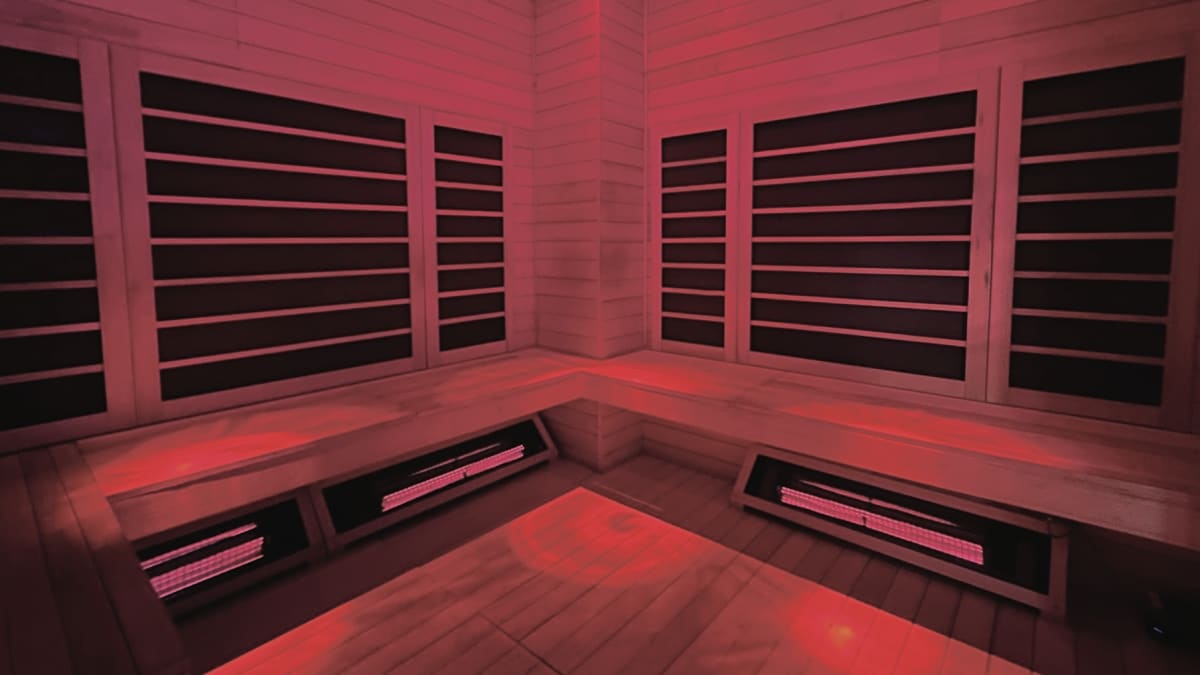
Infrared saunas use light waves to heat your body directly rather than superheating the air, operating at a more comfortable 120-150 degrees versus 150-190 for traditional saunas.
A 2015 study on infrared sauna and exercise recovery found that far-infrared sauna use after exercise reduces DOMS and accelerates recovery timelines. The infrared heat increases deep tissue blood flow, delivering oxygen and nutrients to damaged muscles while clearing metabolic waste faster.
Beyond muscle recovery, a large cohort study in JAMA Internal Medicine found that frequent sauna use was associated with improved cardiovascular health and reduced all-cause mortality. Regular use also supports better sleep quality and lower cortisol — making infrared sauna one of the most well-rounded recovery tools available.
Best for: Post-workout recovery 2-3 times per week, or on rest days. Evening sessions can improve sleep by triggering the post-session body temperature drop that initiates deeper sleep. Start with 15-20 minutes at 130-140 degrees and work up to 30 minutes.
At Total Body Fitness, infrared sauna access is included with every membership level — no additional fees, no session limits. Standalone studios typically charge $30-50 per session. For a deep dive, read our complete infrared sauna guide.
3. Massage Gun — Limited-to-Moderate Evidence
A 2020 study in the Journal of Clinical and Diagnostic Research found that percussive therapy reduces DOMS similarly to traditional massage. The research is still young — most studies have small sample sizes — but the mechanism appears similar to foam rolling: pain modulation and increased local blood flow rather than structural tissue changes.
Best for: Targeted relief for specific muscle groups, especially areas where positioning on a foam roller is awkward (upper back, glutes, calves). Use 30-60 seconds per muscle group — more can bruise tissue. A $100 gun performs comparably to a $400 one.
4. Ice Baths / Cold Plunge — Mixed Evidence
This is where it gets nuanced. Cold water immersion (50-59 degrees F for 5-15 minutes) does reduce acute inflammation and perceived soreness. However, a landmark 2015 study by Roberts et al. in the Journal of Physiology found that regular cold water immersion after strength training blunted muscle protein synthesis and long-term hypertrophy gains.
The inflammation that ice baths suppress is actually part of the muscle-building process. If you’re training for muscle growth or strength, regularly suppressing that inflammation may work against your goals. The American College of Sports Medicine has acknowledged that regular post-strength-training cold immersion requires careful consideration given these findings.
Best for: Acute injury management and between same-day competition events — not regular post-strength-training use. If you use cold plunges, save them for rest days. A cold shower provides milder benefits without the hypertrophy concerns.
5. Compression Boots (e.g., Normatec) — Limited Evidence
A 2018 systematic review in the Journal of Athletic Training found that while compression therapy may reduce perceived soreness, evidence for objective recovery improvements is weak. Most positive findings relate to how athletes feel rather than measurable physiological changes. The placebo effect likely plays a significant role.
Best for: Competitive athletes with the budget for it. For most gym-goers, the $30-50 per session cost is hard to justify. Elevating your legs for 15 minutes provides some of the same circulatory benefits for free.
6. Epsom Salt Baths — Insufficient Evidence
The core claim is that magnesium absorbs through your skin, reducing cramps and soreness. However, research on transdermal magnesium absorption shows that skin absorption is minimal — the amounts that penetrate are unlikely to meaningfully affect muscle function.
A warm bath itself does increase blood flow and promote relaxation. Those benefits come from the warm water, not the Epsom salts. If you enjoy them, keep using them — they’re harmless and inexpensive. Just know the recovery benefit is the bath, not the magnesium.
7. Whole-Body Cryotherapy — Insufficient Evidence
Standing in a chamber at -200 to -300 degrees F for 2-4 minutes costs $40-75 per session. A 2017 Cochrane Review — the gold standard of evidence reviews — concluded there is insufficient evidence that cryotherapy reduces muscle soreness or improves recovery compared to simpler interventions.
The FDA has flagged safety concerns including frostbite and burns, and has not cleared any cryotherapy device for medical treatment. A $5 bag of ice in a bathtub provides similar cold exposure at a fraction of the cost.
The Bottom Line
Recovery doesn’t have to be complicated or expensive. Foam rolling and infrared sauna offer the best combination of evidence, accessibility, and value. If you’re building a recovery routine from scratch:
- Fix your sleep and nutrition first
- Foam roll for 5-10 minutes post-workout
- Use an infrared sauna 2-3 times per week
- Everything else is optional optimization
For a comprehensive recovery protocol, check out our complete gym recovery guide.
Frequently Asked Questions
What is the best recovery method after a workout?
For most gym-goers, the highest-impact protocol is straightforward: adequate sleep (7-9 hours), sufficient protein within a few hours of training, and proper hydration. Beyond those fundamentals, foam rolling post-workout and infrared sauna sessions 2-3 times per week have the strongest evidence-to-cost ratio. Expensive gadgets and services are not necessary — the basics outperform them every time.
Are ice baths good for muscle recovery?
Ice baths reduce perceived soreness short-term, but regular cold water immersion after strength training may blunt muscle growth. A 2015 study by Roberts et al. found that cold immersion attenuated long-term gains in muscle mass and strength. If you train for hypertrophy or strength, reserve ice baths for acute injuries or same-day competition events. For ongoing recovery, infrared sauna provides soreness relief without interfering with muscle adaptation.
Is infrared sauna good for recovery?
Yes. Infrared sauna increases deep tissue blood flow, reduces DOMS, lowers cortisol, and improves sleep — all of which directly support recovery. Unlike ice baths, infrared sauna doesn’t blunt muscle-building adaptations, making it safe for regular post-training use. At Total Body Fitness, sauna access is included with every membership at no extra charge.
How much should I spend on recovery tools?
Very little. A foam roller ($15-30) and access to an infrared sauna cover the two most evidence-backed tools beyond sleep and nutrition. A massage gun ($100-150) is a nice convenience but not essential. Compression boots, cryotherapy, and premium recovery services have limited evidence and high per-session costs. Invest in better food, a quality mattress, and consistent training before spending on recovery gadgets.
Ready to Recover Smarter?
Total Body Fitness includes infrared sauna access with every membership — no session fees, no booking limits. Memberships start at $55/month with no enrollment fees, or as low as $37/month with a longer commitment. Check out our membership options or call (816) 403-4910.
Written by Deshae Betts, IFBB Pro and owner of Total Body Fitness in Lee’s Summit, MO. She coaches athletes from first-time gym members to competitive bodybuilders and holds certifications in personal training and nutrition.


